Center widget flutter


The Center widget in Flutter is a simple yet powerful widget that centers its child within the available space. It's often used to position a widget in the middle of its parent widget.

Key Features of Center

  1. Alignment: The Center widget by default centers its child both horizontally and vertically.
  2. Constraints: The child of a Center widget is allowed to have any size it wants unless constrained by its parent.
  3. Ease of Use: The Center widget is commonly used because of its simplicity and readability when designing UI.

    Parameters

    1. child:

      • The widget that you want to center.
      • If null, the Center widget will occupy all available space but won't display anything.
    2. widthFactor and heightFactor:

      • Multipliers for the size of the child.
      • These are optional parameters. If specified, the width and/or height of the Center widget will be the child’s size multiplied by the respective factor.
      • If null, the Center will expand to fit its parent.

    Basic Example

    dart
    import 'package:flutter/material.dart'; void main() { runApp(MaterialApp( home: Scaffold( body: Center( child: Text( 'Hello, Flutter!', style: TextStyle(fontSize: 24), ), ), ), )); }

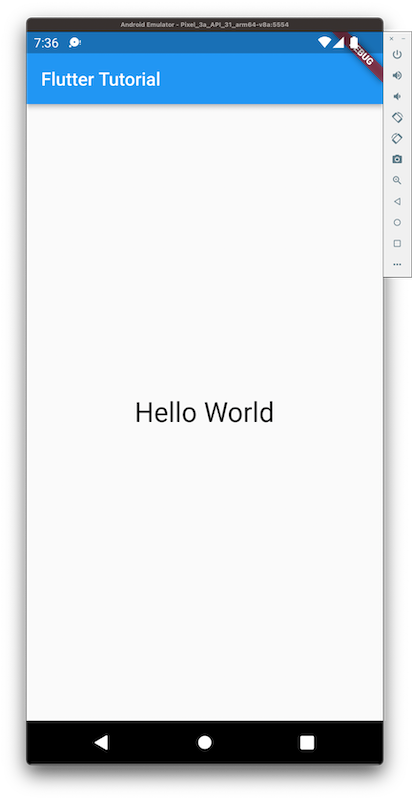
    Output: The text Hello, Flutter! will be centered on the screen.


    Example with widthFactor and heightFactor

    dart
    Center( widthFactor: 2.0, heightFactor: 2.0, child: Container( color: Colors.blue, width: 50, height: 50, ), )

    In this case:

    • The blue container's size is 50x50.
    • The Center widget's size will be 2 times the width and height of the container (i.e., 100x100).

    Why Use Center?

    • Quick and Clean: It eliminates the need for complex positioning logic for centralizing widgets.
    • Common in UIs: Many designs require elements to be centered, making Center a go-to widget.

    Alternatives

    • Align: Use Align if you need more control over the positioning, like aligning to a specific edge or corner.
    • Padding or Container: These can also be used in conjunction with alignment for similar effects.

    The Center widget is a fundamental building block in Flutter that simplifies centering tasks.

Comments

Your Complete Flutter Roadmap: From Beginner to Pro

📱 Flutter ListTile and ListView: Explained with Easy Examples

Flutter ListTile and ListView: When you start learning Flutter, two widgets often confuse beginners: ListTile  &  ListView . Both are used to display items in a list, but their purpose is different. Let’s break them down in a simple way. 🔹 What is ListTile in Flutter? ListTile is a ready-made widget used to show a single row (one item). It usually contains: title (main text) subtitle (small text under the title) leading (icon/image on the left) trailing (icon/text on the right) 👉 Think of ListTile as a single row card inside a list. ✅ Example of ListTile: import 'package:flutter/material.dart'; void main() { runApp(const MyApp()); } class MyApp extends StatelessWidget { const MyApp({super.key}); @override Widget build(BuildContext context) { return MaterialApp( home: Scaffold( appBar: AppBar(title: const Text("Flutter ListTile Example")), body: const ListTile( leading:...

🌀 Flutter App Lifecycle – Easy Way to Understand

  When you build an app in Flutter , it goes through different states depending on how the user interacts with it (open, minimize, back button, etc). Think of it like a human day cycle – Wake up → Active → Sleep → Wake again . 🌱 1. main() – Birth of the App Every Flutter app starts from the main() function. void main() { runApp(MyApp()); } 👉 This is like turning ON the lights – your app is born. 🏗 2. Widgets Lifecycle In Flutter, everything is a Widget . There are two main types: StatelessWidget → UI that doesn’t change. StatefulWidget → UI that changes with user interaction. For StatefulWidget , the lifecycle looks like this: 🔹 When Widget is created createState() → Creates a State object (like preparing memory). initState() → First time setup (like waking up, stretching, preparing breakfast). Best place for API calls , animation controllers , initial values . 🔹 When Widget builds build() → Renders UI (like dressin...

Flutter AppBar with an Easy Example

  In Flutter, the AppBar is a simple yet powerful widget that provides the top app bar typically found in mobile applications. It is a critical part of your app's layout and design, giving users easy access to navigation, search, actions, and other features in your app. In this blog post, we will explore the AppBar widget in Flutter, how to customize it, and provide a simple example to help you get started. ------------------------------------------------------------------------ What is an AppBar in Flutter? The AppBar widget in Flutter is a material design app bar that can be used to display titles, icons, action buttons, and other important elements at the top of your app screen. The AppBar is usually placed inside a Scaffold widget, which provides a basic layout structure for the app.  Key Features of AppBar : Title : Displays the main title of the screen. Actions : Typically used to place action icons like search or menu buttons. Lead...